

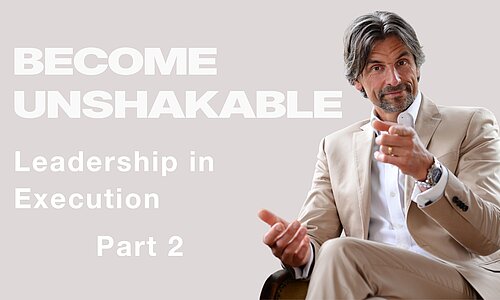
Leadership in Execution – Part 2

Why Leadership Training Doesn’t Change Behavior
Dear CEOs and leaders,
Organizations invest heavily in leadership training every year.
Programs are well designed.
Content is strong.
Feedback is positive.
Yet after some time, a familiar reality appears:
very little changes in daily behavior.
1. The Leadership Paradox
After training, leaders often report:
- new insights
- useful frameworks
- valuable ideas
But weeks later:
- old behaviors return
- decisions remain unchanged
- team dynamics stay the same
Why?
2. A Timeless Insight
The answer is not new:
“Do not merely listen… Do what it says.” — James 1:22
Understanding does not change behavior.
Execution does.
3. Why Training Fails
Training focuses on:
- knowledge
- tools
- frameworks
Behavior is shaped by:
- habits
- systems
- expectations
- culture
Which means:
Training meets a system — and the system wins.
4. The Critical Misconception
Many organizations assume:
If people understand leadership, they will behave differently.
Reality:
People behave according to what the system allows — or rewards.
5. What Happens in Practice
After training, leaders return to environments that:
- reinforce old behaviors
- avoid conflict
- tolerate ambiguity
- dilute accountability
The result:
reversion to old patterns.
6. Why This Is Not a Training Problem
Most training is well designed.
The issue is:
- lack of embedding
- lack of consequence
- lack of integration
Training works only when:
- behavior is reinforced daily
- expectations are clear
- accountability is real
7. The Shift That Matters
Organizations that succeed do not only change training.
They change:
- systems
- expectations
- structures
- team dynamics
Because:
Behavior is created in systems — not in classrooms.
8. Your Next Step
If you want to understand:
- why training does not create the expected impact
- where structural barriers exist
- how to embed leadership behavior systemically
I invite you to a confidential executive conversation.
No theory.
No standard programs.
Only clarity.
The key question:
Is your system producing the behavior you expect?

Comments
No Comments