

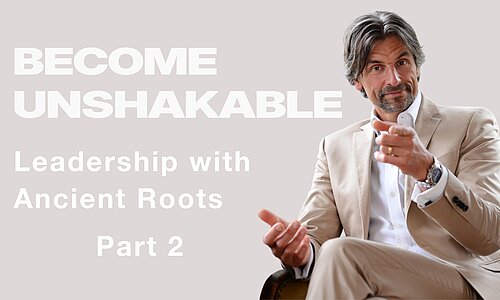
Leadership with Ancient Roots - Part 2
Why Power Without Humility Destroys Organizations
Dear CEOs and leaders,
Power is inseparable from leadership.
Leaders decide on:
- strategy
- budgets
- priorities
- careers
With greater responsibility comes greater influence.
Yet here lies one of the greatest dangers of leadership.
Power changes people.
And without humility, it changes organizations.
1. The Silent Risk of Power
Many leaders begin their careers with competence, discipline, and ambition.
But as influence grows, something often changes.
- feedback becomes rarer
- criticism softer
- disagreement quieter
Hierarchy acts like a filter.
The higher a leader rises, the less unfiltered reality reaches them.
An ancient proverb describes this dynamic with remarkable clarity:
“Pride goes before destruction.”
— Proverbs 16:18
This is not merely moral advice.
It describes a recurring pattern in leadership.
2. When Leadership Loses Contact With Reality
Most corporate crises do not begin with strategy errors.
They begin with subtle shifts in leadership culture:
- critical voices disappear
- risks are underestimated
- successes are exaggerated
- leadership becomes unquestionable
Organizations then lose a critical capability:
self-correction.
3. Humility as Leadership Strength
Humility is often misunderstood.
Humility does not mean weakness.
It means:
- openness to learning
- proximity to reality
- willingness to hear criticism
- awareness of one’s limits
Humility protects leaders from the most dangerous illusion of power: infallibility.
4. The Mindset of Great Leaders
Great leaders regularly ask themselves:
- Where might I be wrong?
- Which perspective am I missing?
- Who sees risks more clearly than I do?
These questions create space for something essential: correction.
5. A Timeless Leadership Insight
Another ancient insight captures this leadership principle:
“Where there is strife, there is pride, but wisdom is found in those who take advice.”
— Proverbs 13:10
Organizations led by pride experience:
- internal conflict
- political behavior
- silo thinking
Organizations led with humility experience:
- trust
- open dialogue
- stronger decisions
A Provocative Question
Is humility part of your leadership culture?
Or is leadership silently equated with infallibility?
Next Newsletter
In the next part of this series we explore another core leadership capability: Why clarity is one of the most powerful leadership skills.
“Let your yes be yes and your no be no.”
— Matthew 5:37

Comments
No Comments